Management of Hospital Readmission Intervention Program for Diabetes Patients: A Machine Learning Approach
DOI:
https://doi.org/10.54741/MJAR/6.4.2026.323Keywords:
diabetes intervention, readmission classification, machine learning, lift chart, profit chart, financial feasibilityAbstract
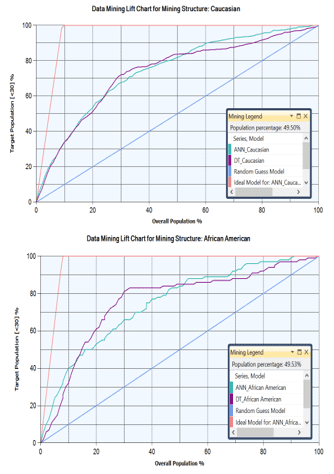
This paper presents a simple intervention program to reduce the risk of hospital readmission for people with type 2 diabetes (T2D). To this end, we deployed machine learning models to identify T2D patients who are most likely to be readmitted and assessed them using both a set of numerical metrics and graphical tools. Then, we applied models to subgroups based on three demographic features---race, age, and gender---to fine tune subgroup specific predictive gains and insights on the way of profiling patients who need to be monitored carefully. Overall, we found that the proposed intervention program would be financially feasible with currently available prediction models and would help health administrators determine the scale of the proposed intervention program based on estimated benefits and costs.
Downloads
References
International Diabetes Federation (IDF). (2021). The diabetes atlas. (10th ed.). https://diabetesatlas.org/atlas/tenth-edition/
Centers for Disease Control and Prevention (CDC). (2024). National diabetes statistics report. Atlanta, GA: Centers for Disease Control and Prevention, U.S. Dept. of Health and Human Services. Available at: https://stacks.cdc.gov/
Keating, B. J. (2015). Advances in risk prediction of type 2 diabetes: Integrating genetic scores with Framingham risk models. Diabetes, 64(5), 1495-1497.
Bannuru, R.R. (2024). Economic costs of diabetes in the U.S. in 2022. Diabetes Care, 47(1), 26-43.
Jack, B.W., Chetty, V.K., Anthony, D., Greenwald, J.L., Sanchez, G.M., Johnson, A.E., Forsythe, S.R., O’Donnell, J.K., Paasche-Orlow, M.K., Manasseh, C., Martin, S., & Culpepper, L. (2009). A reengineered hospital discharge program to decrease rehospitalization: A randomized trial. Annals of Internal Medicine, 150(3), 178–187.
Dedhia, P., Kravet, S., Bulger, J., Hinson, T., Sridharan, A., Kolodner, K., Wright, S., & Howell, E. (2009). A quality improvement intervention to facilitate the transition of older adults from three hospitals back to their homes. Journal of the American Geriatrics Society, 57(9), 1540–1546.
Wilson, P.W., Meigs, J.B., Sullivan, L., Fox, C.S., Nathan, D.M., and D’Agostino, R.B. (2007). Prediction of incident diabetes mellitus in middle-aged adults: The framingham offspring study. Archives of Internal Medicine, 167(10), 1068-1074.
Balkau, B., Lange, C., Fezeu, L., Tichet, J., de Lauzon-Guillain, B., Czernichow, F., Froguel, P., Vaxillaire, M., Cauchi, S., Ducimetière, P., & Eschwège, E. (2008). Predicting diabetes: Clinical, biological, and genetic approaches data from the epidemiological study on the insulin resistance syndrome (DESIR). Diabetes Care, 31(10), 2056-2061.
Newman, B., Selby, J.V., King, M.C., Slemenda, C., Fabsitz, R., & Friedman, G.D. (1987). Concordance for type 2 (non-insulin-dependent) diabetes mellitus in male twins. Diabetologia, 30(10), 763-768.
Saxena, R., Elbers, C.C., Guo, Y., et al. (2012). Large-scale gene-centric meta-analysis across 39 studies identifies type 2 diabetes loci. American Journal of Human Genetics, 90(4), 410–425.
Keating, B.J. (2015. Advances in risk prediction of type 2 diabetes: Integrating genetic scores with Framingham risk models. Diabetes, 64(5), 1495-1497.
Asselbergs, F.W., Guo, Y., van Iperen, E.P., Sivapalaratnam, S., Tragante, V., Lanktree, M.B., ... and Baumert, J. (2012). Large-scale gene-centric meta-analysis across 32 studies identifies multiple lipid loci. American Journal of Human Genetics, 91(5), 823-838.
Strack, B., DeShazo, J. P., Gennings, C., Olmo, J. L., Ventura, S., Cios, K. J., and Clore, J. N. (2014). Impact of HbA1c measurement on hospital readmission rates: Analysis of 70,000 clinical database patient records. BioMed Research International. doi:10.1155/2014/781670.
Liu, X., Li, Y., Li, L., Zhang, L., Ren, Y., Zhou, H., ... & Wang, C. (2016). Prevalence, awareness, treatment, control of type 2 diabetes mellitus and risk factors in Chinese rural population: The RuralDiab study. Scientific Reports, 6, 31426.
Harris, M. I., Klein, R., Cowie, C.C., Rowland, M., & Byrd-Holt, D. D. (1998). Is the risk of diabetic retinopathy greater in non-Hispanic blacks and Mexican Americans than in non-Hispanic whites with type 2 diabetes? A US population study. Diabetes Care, 21(8), 1230-1235.
Maty, S.C., Everson-Rose, S.A., Haan, M.N., Raghunathan, T.E., & Kaplan G.A. (2005). Education, income, occupation, and the 34-year incidence (1965-99) of Type 2 diabetes in the Alameda County Study. International Journal of Epidemiology, 34(6). 1274-1281. doi:10.1093/ije/dyi167.
Brown, A.F., Gregg, E.W., Stevens, M.R., Karter, A.J., Weinberger, M., Safford, M.M., ... & Beckles, G.L. (2005). Race, Ethnicity, Socioeconomic Position, and Quality of Care for Adults with Diabetes Enrolled in Managed Care the Translating Research into Action for Diabetes (TRIAD) study. Diabetes Care, 28(12), 2864-2870.
Maty, S.C., James, S.A., & Kaplan, G.A. (2010). Life-course socioeconomic position and incidence of diabetes mellitus among blacks and whites: The Alameda County Study, 1965-1999. American Journal of Public Health, 100(1), 137-145. doi:10.2105/AJPH.2008.133892.
Maty, S.C., Lynch, J.W., Raghunathan, T.E., & Kaplan, G.A. (2008). Childhood socioeconomic position, gender, adult body mass index, and incidence of type 2 diabetes mellitus over 34 years in the Alameda County Study. American Journal of Public Health, 98(8), 1486-94. doi:10.2105/AJPH.2007.123653.
Baltrus P.T., Everson-Rose S.A., Lynch J.W., Raghunathan, T.E., & Kaplan, G.A. (2007). Socioeconomic position in childhood and adulthood and weight gain over 34 years: The Alameda county study. Annals of Epidemiology, 17(8), 608-614. doi:10.1016/j.annepidem.2007.03.007.
Liu, C., He, L., Li, Y., Yang, A., Zhang, K., & Luo, B. (2023). Diabetes risk among US adults with different socioeconomic status and behavioral lifestyles: Evidence from the National Health and Nutrition Examination Survey. Front Public Health, 22(11). doi:10.3389/fpubh.2023.1197947.
Frank, A., & Asuncion, A. (2010). UCI machine learning repository.
Palmer, A. J., Roze, S., Valentine, W. J., Spinas, G. A., Shaw, J. E., & Zimmet, P. Z. (2004). Intensive lifestyle changes or metformin in patients with impaired glucose tolerance: Modeling the long-term health economic implications of the diabetes prevention program in Australia, France, Germany, Switzerland, and the United Kingdom. Clinical Therapeutics, 26(2), 304-321.
Published
How to Cite
Issue
Section
License
Copyright (c) 2026 Yong Seog Kim, Jie Kuang

This work is licensed under a Creative Commons Attribution 4.0 International License.
Research Articles in 'Management Journal for Advanced Research' are Open Access articles published under the Creative Commons CC BY License Creative Commons Attribution 4.0 International License http://creativecommons.org/licenses/by/4.0/. This license allows you to share – copy and redistribute the material in any medium or format. Adapt – remix, transform, and build upon the material for any purpose, even commercially.


